

How to Grow Big Onions
Onions are one of the very first crops you can plant in spring. They hold the promise of a productive garden season, and a harvest that can last you all winter long.
But if you’re like me… well, let’s just say I spent more years than I’d like to admit with a tiny harvest of tiny onions. It was frustrating, and it was disappointing.
So today we’re going to talk about the real reasons your onions stay small, even when you feel like you’re doing everything right.
Want to listen instead?
This post may contain affiliate links. Read my disclosure here.
Learn the "onion-growing rules"
Two of the very first things you can plant in early spring are onions and potatoes.
Every spring, I’d go to our local hardware store or feed store, pick up a bag of dried onion sets, and plant them. But my onions just didn’t do much.
Maybe half of them would sprout. They didn’t grow very tall. And they never really formed much of a bulb. They really didn't look much different from the "set" I planted in the ground.
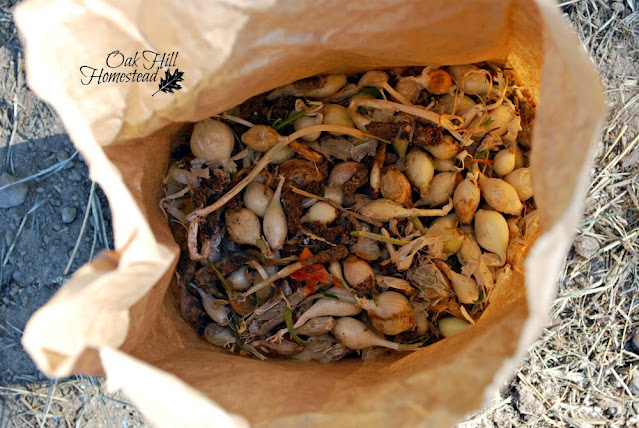 |
| A bag of onion sets, which are actually second-year plants. |
I suppose they were fine as green onions. But that’s not what I wanted. I wanted big onions: the kind you can slice onto a burger, and store all winter long for soups and stews.
Then one spring, my friend Robin gave me a coffee can filled with onion plants. Not sets, but plants.
I planted them right alongside the onion sets I had already bought, and I was blown away by the difference.
That year, it was the only thing I changed - but it set me on the path to growing onions successfully. Now I harvest big onions that store through the winter, and often much longer.
Here are the tips to growing big beautiful onions! Let’s go through them one by one.
Rule #1: Grow the Right Day-Length Onion
This is another one that really changed things for me.
Onions form bulbs based on the number of hours of daylight, and that depends on where you live. There are three types of onions:
- Short-day
- Long-day
- Intermediate-day
If you plant the wrong type for your region, your onions simply won’t size up properly. Long-day onions won’t bulb correctly in the South; Short-day onions will bulb too early in the North
And here’s why that matters: onions build bulbs from their tops down.
The green leaves above ground determine the size of the bulb below ground. More healthy leaves equals bigger onions.
If the plant gets the signal to bulb too early (or too late), it won’t have enough top growth - and you’ll end up with small bulbs.
Imagine a line drawn across the middle of the US, from east to west. If you live:
- In the northern U.S. → grow long-day onions
- In the southern U.S. → grow short-day onions
- In the middle → you can grow intermediate-day onions (and sometimes one of the others too, depending on where you live)
If you don’t live in the U.S., compare your latitude to the US to figure out which type of onion is best for you to grow.

Rule #2: Start With Plants, Not Sets
This isn't exactly a rule, but it's definitely a strong suggestion!
Onion sets - those little dried bulbs in net bags - are actually second-year onions. They were started from seed the previous year, harvested early, and stored until spring, when they are shipped to stores and sold.
Because of that, they’re much more likely to bolt (send up a flower stalk), which takes energy away from the bulb.
Onion plants (transplants), on the other hand, are started fresh from seed early this year, shipped, and then planted right away. They are far more likely to produce large bulbs.
Once I switched from sets to plants, everything changed. If your goal is big onions, start with plants whenever possible.
(NOTE: you can also grow onions from seed. I personally prefer buying transplants.)
Rule #3: Plant Them Early
Onions need to be planted early - very early. Much earlier than you think!
Plant onion transplants 4-6 weeks before your last frost date. If you wait until it feels like spring, you’ve waited too long.
Onions need that cool early-season weather to build leafy tops before the days get long enough to trigger bulbing. In other words, if there's no top growth, you won't get big bulbs.
Rule #4: Don’t Plant Too Deep
We tend to think of onions as root vegetables, like carrots, but they don’t grow the same way.
Onions should be planted about 1 inch deep. Since I tend to plant too deeply, even when I'm trying not to, I do this:
I loosen the soil, set the onion transplant in place, snug the soil up against it, then pull it back up about half an inch and snug the soil again.
Then, as the bulbs begin to swell later in the season, gently move soil away from them. Eventually, your onions should look like they’re almost sitting on top of the soil, with just the roots underground.
This one small adjustment makes a big difference.

Rule #5: Give Them Space
Onions need elbow room, so space them about 5-6 inches apart. If they’re too close together, they compete for nutrients and water - and you’ll get smaller bulbs.
If you want green onions early, you can plant closer and then harvest every other one, which thins them and gives the remaining onions more space to continue growing.
Rule #6: Start With Good Soil
Onions have shallow roots, and they can’t reach deep into the soil for nutrients. They need:
- Fertile soil
- Good drainage
- Plenty of organic matter
Adding compost to your soil before planting improves soil structure, drainage, and nutrient availability. Discover how to start composting here.
Raised beds are an ideal way to grow onions because they provide excellent drainage.
Click here and I'll send them to you!
Rule #7: Feed Them Regularly
Onions are heavy feeders. Feed them with a nitrogen-rich fertilizer every 2-3 weeks during early growth.
Yes, 2-3 weeks! Put it on your calendar so you won't forget. Remember: healthy tops grow big bulbs.
Once the bulbs begin to swell, stop fertilizing.

Rule #8: Water Consistently
Onions are also thirsty. They need about 1 inch of water per week. Inconsistent watering stresses the plant and limits bulb development.
When the tops begin to turn brown near harvest time, stop watering.
Rule #9: Keep the Weeds Out
Onions do not compete well. Their shallow roots make them especially vulnerable.
If weeds are thriving in your onion bed, your onions are losing.
Keep the bed weed-free, and consider adding mulch such as straw, shredded leaves or pine straw. Spread the mulch about 2 inches thick and keep it slightly away from the plant stems.
A Note on Companion Plants
Avoid planting onions near beans and peas. These crops tie up nitrogen in the soil, and onions need nitrogen.
Better companions include:
- Carrots
- Lettuce
- Strawberries

Rule #10: Grow Them in Full Sun
Onions need full sun, especially when the bulbs are forming. Shade reduces energy, resulting in smaller bulbs.
Be mindful of nearby trees that will cast shade later in the season, and don't plant them in the shade of tall plants like tomatoes.
Rule #11: Harvest at the Right Time
Onions are ready when the neck (just above the bulb) becomes soft and floppy, not just when the tops fall over.
Give the stems a little wiggle to check. If the neck is still thick and stiff, wait a few more days. You’ll likely harvest your onion crop over several days, not all at once.
And don’t pull them by the tops: dig them up instead. They'll store better this way.
After harvesting, onions need to be cured before storage. You can find my full guide on harvesting, curing, and storing onions here.
What About Bolting?
If your onion sends up a flower stalk, it’s bolting (going to seed). This is often caused by:
- Stress
- Inconsistent watering
- Excess heat
Bolting is more common when you plant sets instead of transplants.
Once an onion bolts, the bulb stops growing. Cutting off the flower stalk won’t fix it.
Instead, harvest that one onion and use it soon, since it won't store well.
Don’t be discouraged - it happens to all of us. I usually have a couple that bolt each summer. We simply use that onion in the next couple of days, or I chop and freeze it for later use.
 |
| An onion plant that has bolted and flowered. This onion bulb has stopped growing and should be harvested and used. |
The struggle is real
If you’ve struggled with small onions, you are not alone. I did too - for years. But once I figured out the "rules," everything changed!
Growing big onions isn’t complicated once you understand what they need - and now you know!
Resources
I recommend Dixondale Onion Farms in Texas. They also provide a helpful map showing which day-length onions to grow in your region.
Related Posts:
Harvesting, curing and storing onions
French onion soup from scratch

Facebook | Pinterest | Instagram | Subscribe

Kathi Rodgers is the gardener and writer behind Oak Hill Homestead (est. 2006) and the host of HOMEGROWN: Your Backyard Garden Podcast. With over 30 years of gardening experience in a variety of climates and soils, she helps new and aspiring gardeners grow healthy, organic food right in their own backyards.
A passionate advocate for simple, self-reliant living, Kathi is the author of multiple ebooks, a published magazine contributor, and shares practical advice with readers who want real-life solutions they can trust.
Kathi lives in Oklahoma, where she grows more cherry tomatoes than she can count and keeps a watchful eye on tornado season. A proud grandma and great-grandma, she believes that wisdom - like a bountiful garden harvest - should be shared.


